High resolution publicity photos can be found
here

BIOGRAPHY:
Simon Reeve is a TV presenter and New York Times bestselling author. He has travelled to more than 90 countries, including troubled states in the Caucasus, Latin America, Eastern Europe, the Middle East, Africa, Far East and Central Asia, and been around the world three times for the BBC series Equator, Tropic of Capricorn, and Tropic of Cancer. He’s been awarded a One World Broadcasting Trust award for an “outstanding contribution to greater world understanding”.

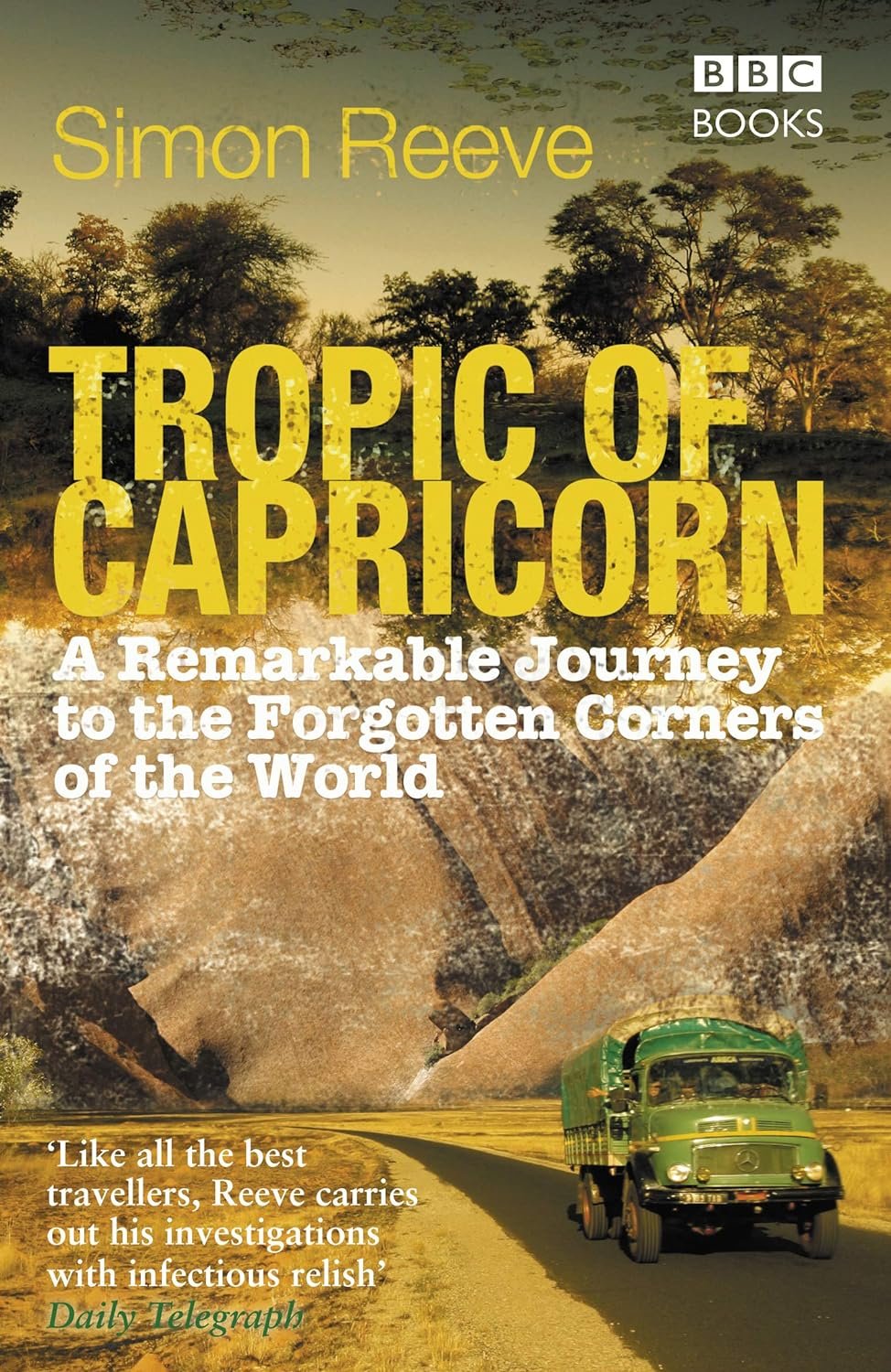
His books include Tropic of Capricorn (published by BBC Books), and The New Jackals: Ramzi Yousef, Osama bin Laden and the Future of Terrorism, a New York Times bestseller, published in 1998, which predicted the rise of al Qaeda and a new age of apocalyptic terrorism. His book One Day in September: the story of the 1972 Munich Olympics massacre is also an Oscar-winning documentary movie.

Simon is rapidly becoming one of the most widely travelled people in the country. On his travels he’s been arrested for spying by the KGB, taught to fish by the President of Moldova, tracked by terrorists, electrocuted in a war-zone and protected by stoned Somali mercenaries. He’s hunted with the Bushmen of the Kalahari, walked through minefields, witnessed trench warfare in the Caucasus, struggled across the country enduring the most violent conflict on the planet since WW2, and wandered through a radioactive waste dump while protected by little more than a shower curtain.

He holds an official Somali diplomatic passport – bought from a man called Mr Big Beard in Mogadishu, the most dangerous city in the world. He’s been surrounded by a pack of hungry cheetahs, adopted by a tribe of former head-hunters in Borneo, blackmailed and abandoned by drivers in an Ebola zone, pursued by a huge amorous camel around a poisoned sea, had his life saved by Vietnamese sweet wormwood, and eaten some of the weirdest and most unusual foods available, from zebu penis soup to grilled squirrel.

Simon has survived malaria, played polo with the corpse of a headless goat, swum with sea-lions, fished for piranhas, climbed the equivalent of half-way up Everest while surviving on coca leaves, travelled around the planet by van, canoe, car, train, boat, horseback, helicopter, plane, a 50-metre-long $1m truck, and used a zip-line to get inside one of the most repressive states in the world.

Born and raised in west London, Simon went to a local comprehensive, where he was an unspectacular student. After a series of terrible jobs, including working in a supermarket, a jewellery shop, and a charity shop, Simon finally found gainful employment as a postboy at a national newspaper. Still in his teens, he sorted the mail during the day, and began researching and writing in his spare time. His 'big break' came when he found two foreign terrorists on the run in the UK, and he began conducting investigations for the newspaper into subjects such as arms-dealing, nuclear smuggling, terrorism and organised crime.

In 1993, Simon began studying the first World Trade Center attack just hours after the bombing. While investigating the background and origins of those responsible for the 1993 terrorist strike, Simon discovered more terror attacks were being planned by a disparate group of militants connected to the bombers - a group now commonly called al Qaeda.

Over the next few years, Simon traced and interviewed 'Afghan Arabs' and close friends and supporters of Osama bin Laden, along with senior FBI, CIA, and Asian intelligence officials. Simon had clandestine meetings with spies and militants in tea houses, car parks and burger bars, was followed by secret agents from at least two countries, and worked undercover in disguise while searching for a former Lebanese arms smuggler. Traveling across three continents, Simon obtained classified documents and evidence detailing the existence, development and aims of the most dangerous terrorist organisation in modern history.

Simon's research and conclusions formed the basis of his first book
The New Jackals: Ramzi Yousef, Osama bin Laden and the future of terrorism. Published in the UK and USA in the late 1990s it was the first book in the world on bin Laden and al Qaeda. The New Jackals warned al Qaeda was planning huge attacks on the West, and concluded an apocalyptic terrorist strike by the group was almost inevitable.

Simon's next book was
One Day in September: the story of the 1972 Munich Olympics massacre and Israeli revenge operation 'Wrath of God', published by Faber and Faber. The movie of the same name, narrated by the actor Michael Douglas, won the Oscar for best feature documentary.

At the time of the attacks of September 11, 2001, Simon's book The New Jackals was one of few sources of information about Osama bin Laden and al Qaeda. The book became a New York Times bestseller, and in the three months after the 9/11 attacks was one of the top three bestselling books in the United States. Simon was repeatedly asked to comment on the new terror threat and the Western response. He became a regular guest and contributor to all of the major US and UK TV networks, including the BBC. Appearing on the BBC led to working for the BBC, and in recent years Simon has been travelling around little-known regions of the world for a series of television documentaries.

Buy Simon's latest book here:


TV WORK:

Simon's first television series was Meet the Stans. In this four part series on Central Asia, broadcast on BBC2 and BBC World during 2003 and 2004, Simon journeyed from the far north-west of Kazakhstan, by the Russian border, east to the Chinese border, south through Kyrgyzstan and Tajikistan to the edge of Afghanistan, and west to Uzbekistan and the legendary Silk Road cities of Samarkand and Bukhara.

During Summer 2004 the BBC2 and BBC World documentary
House of Saud showed Simon traveling around the Kingdom of Saudi Arabia, from the cities of Riyadh and Jeddah, to the isolation of the Empty Quarter desert.

For the five-part BBC2 series
Places That Don’t Exist, broadcast in 2005, Simon visited a group of unrecognised nations – countries so obscure they don’t officially exist - including Somaliland, Transdniestria, Nagorno-Karabkh, Taiwan, Adjaria/Ajaria and South Ossetia.

In 2006 Simon travelled around the world for the BBC series
Equator, The journey took Simon around the region with both the richest biodiversity, and perhaps the greatest concentration of human suffering. Among the countries visited were Gabon, the Democratic Republic of Congo, Uganda, Kenya, Indonesian Sumatra, Borneo and Sulawesi, the Galapagos Islands, Ecuador, Colombia and Brazil.

In 2007 Simon set-off around the
Tropic of Capricorn for a BBC TV series and book. The Capricorn journey started in Namibia, and took Simon through Botswana, South Africa, Mozambique, Madagascar, Western Australia, the Northern Territory, Queensland, Chile, Argentina, Paraguay and Brazil.

During 2008 and early 2009, Simon
and a team of BBC presenters travelled to some of the most exotic and extreme locations on earth for a new TV series called Explore. Explore blends travel with current affairs to get under the skin of some fascinating countries.

Simon spent more than six months travelling around the
Tropic of Cancer during 2009 for a BBC TV series due to be shown on BBC2 during spring 2010.

Simon says his main professional motivation is a fascination with interesting stories, and a basic desire to learn more about issues and subjects that matter, whether that be the emergence of a new terrorist organisation, the personal story of a stateless refugee, or the problems of an apparently obscure country. "Thanks to globalisation, events, issues and problems in far-off countries can have a direct impact on the cozy lives of those of us lucky enough to live in the West," he says. "So why don't we try to find out a little bit more about those issues, and try to resolve them - before they become major problems for all of us?"

IMG_2533_2
Publicity photos: view and download this image at high-resolution
Photo caption: Simon Reeve photographed on his Tropic of Cancer journey while wading across a river in western Burma towards a remote village of the Chin people. Simon's crossing into Chin State was illegal and extremely risky, as Burmese army patrols were a constant threat in one of the most repressive countries in the world. Credit: www.simonreeve.co.uk


Interviews, chats and other stuff with Simon:
The Observer l Wanderlust travel mag 1 l Wanderlust travel mag 2 l BBC website
My Life in Travel l My Week In Media l My Life In Media
Sunday Telegraph interview l Simon's Travel CV at Wanderlust

EdithBowman1EdithRadio1logo youtube


see the award-winning photography of James Reeve, Simon's brother, here. He's very good.